A two-part reflection following a Pint of Science 2026 talk
This year, I gave a talk as part of the Pint of Science 2026 about my research. I found myself thinking about how to explain what I care about in simple terms. And also how to connect that to Birmingham, the city I have been living in since late 2013, when I decided to start my research on metallic alloys used in jet engines.
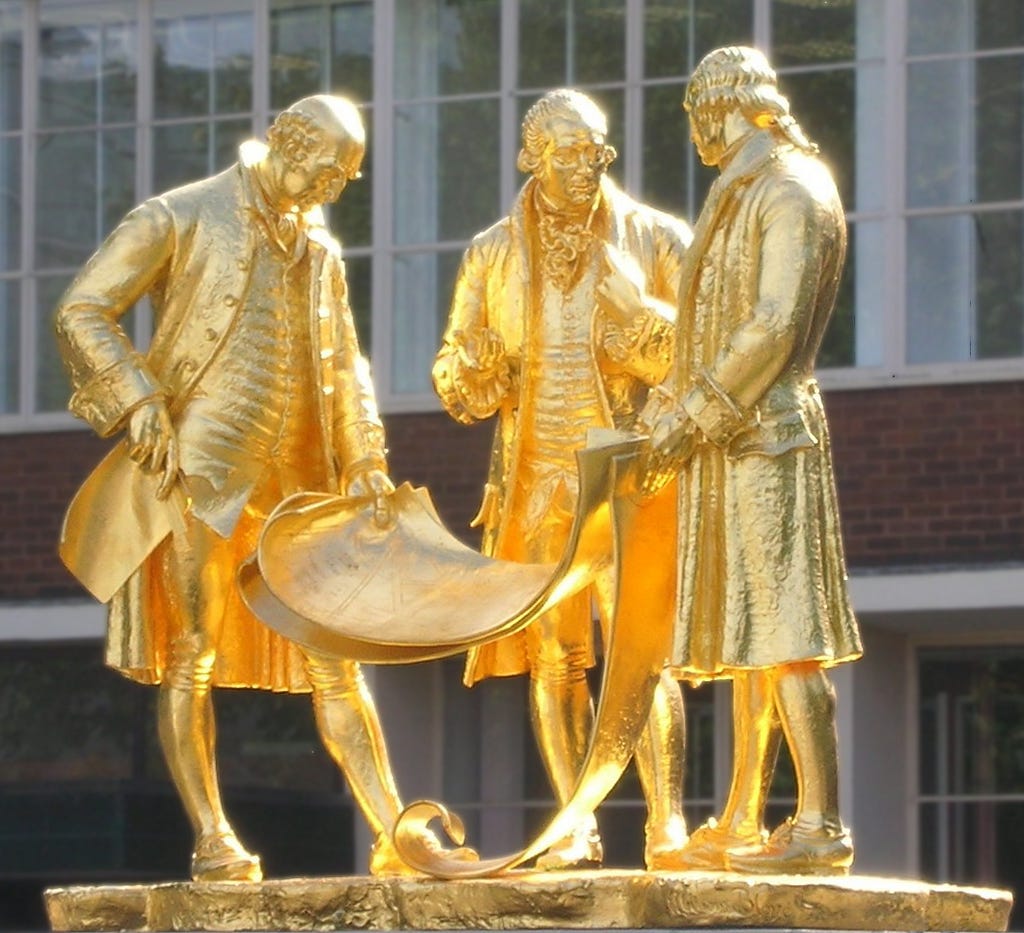
Before that, I had spent a year in Edinburgh, a city that is very aware of its own history, especially when it comes to inventors, engineers and scientists. At the time, I didn’t really think about how these two places might connect. But going back to the late 18th century, one of those Scottish engineers, James Watt, came to Birmingham, where his work on the steam engine developed further through collaboration with Matthew Boulton and William Murdoch. And that’s where things began to come together.
Birmingham was known as the City of a Thousand Trades, built on a remarkable range of trades. This wasn’t about variety, but connection. Hundreds of small workshops, different skills and materials were closely linked, feeding one another. What this created was a way of working where ideas and techniques could spread quickly.
Birmingham was the “Silicon Valley” of the Industrial Revolution, where metallurgy drove innovation and growth.
Brass was the starting point for metallurgy in Birmingham, a metallic alloy made of copper and zinc. It is relatively easy to shape, strong enough for many applications, and well suited for precision work. That made it particularly useful in a wide range of objects: instruments, fittings, decorative elements, and even components supporting early engines. What stands out is not just the material itself, but how it was used. Through repetition and practice, these craftspeople developed a level of skill that allowed them to create with precision and consistency. Over time, that way of working became the foundation of what we would now call engineering. However, this approach, based on skill and repetition, would eventually reach its limits.
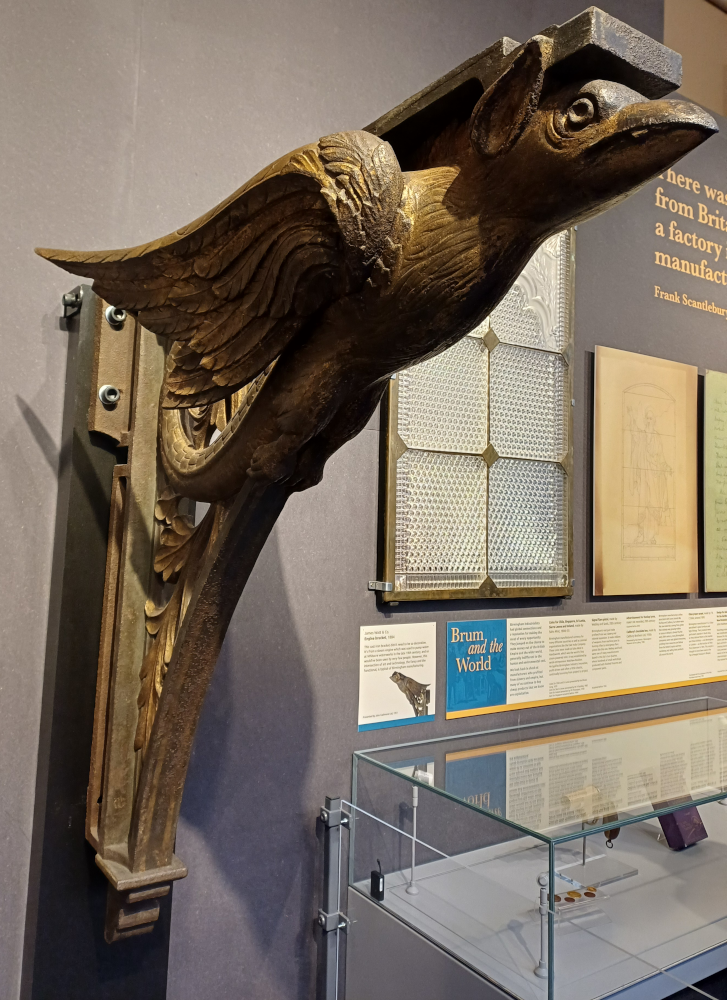
Over time, something important started to change. Metalworking developed from craft to science. Skills that had been developed through experience began to be understood systematically, how materials behave, how they respond to heat, stress, and repeated use. This shift did not happen in isolation. It was closely linked to the environment in Birmingham at the time, a place where ideas were exchanged and developed collaboratively. Groups like the Lunar Society brought together engineers, scientists, and industrialists, including figures such as James Watt, creating space for discussion between theory and practice. Metallurgy became not just about shaping metals, but about understanding them. This became more visible with the development of institutions such as the Mason Science College, and eventually the University of Birmingham, where metallurgy could be explained, taught, and improved.
We moved from relying mainly on trial-and-error to understanding how and why things work. That made industry more efficient, reliable, and easier to scale.
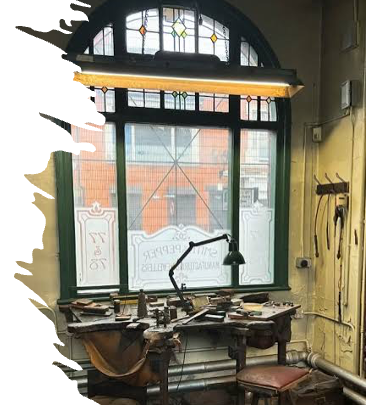
But shaping metals alone wasn’t enough. The industry needed power and this is where figures like James Watt and his collaborators played a central role. With the optimisation of the steam engine, the demands on materials increased again. These machines had to operate continuously under heat, pressure, and once more, metallurgy became essential.
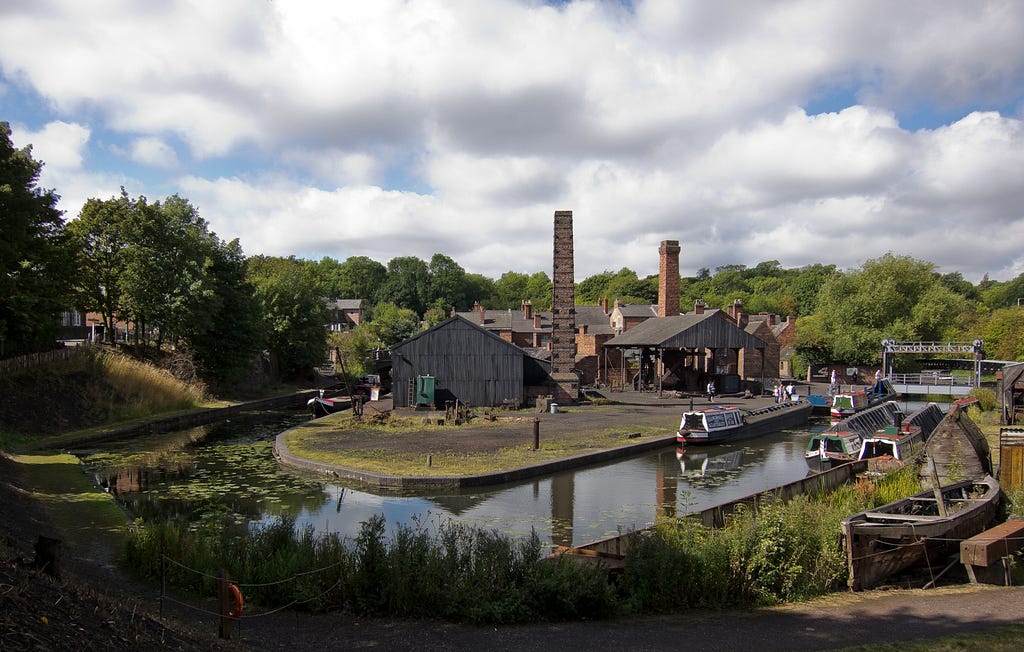
Coal from the Black Country powered steam engines and steam engines powered the industry. The Black Country, with places like Dudley, Wolverhampton, Walsall, supplied coal and iron, the raw materials. Together with Birmingham, they formed a complete industrial system, including raw materials and energy for manufacturing. At the same time, new ways of working with materials started to appear.
Alongside these developments, new techniques began to appear. One of them was electroplating , a way of depositing metal layer-by-layer using electricity. At the time, it was mainly used for practical purposes, improving surfaces and creating finishes more efficiently. But it also introduced something more important, a completely different level of control over how materials are formed. This development took place in Birmingham, where George and Henry Elkington patented the process in 1840. It made it possible to produce coated objects more efficiently by reversing the sequence; the object could be made first, and then coated. A small change in process, but one that expanded how materials could be used. Electroplating brings together chemistry, physics, and metallurgy, and shifts the focus from shaping materials to building them in a controlled way.
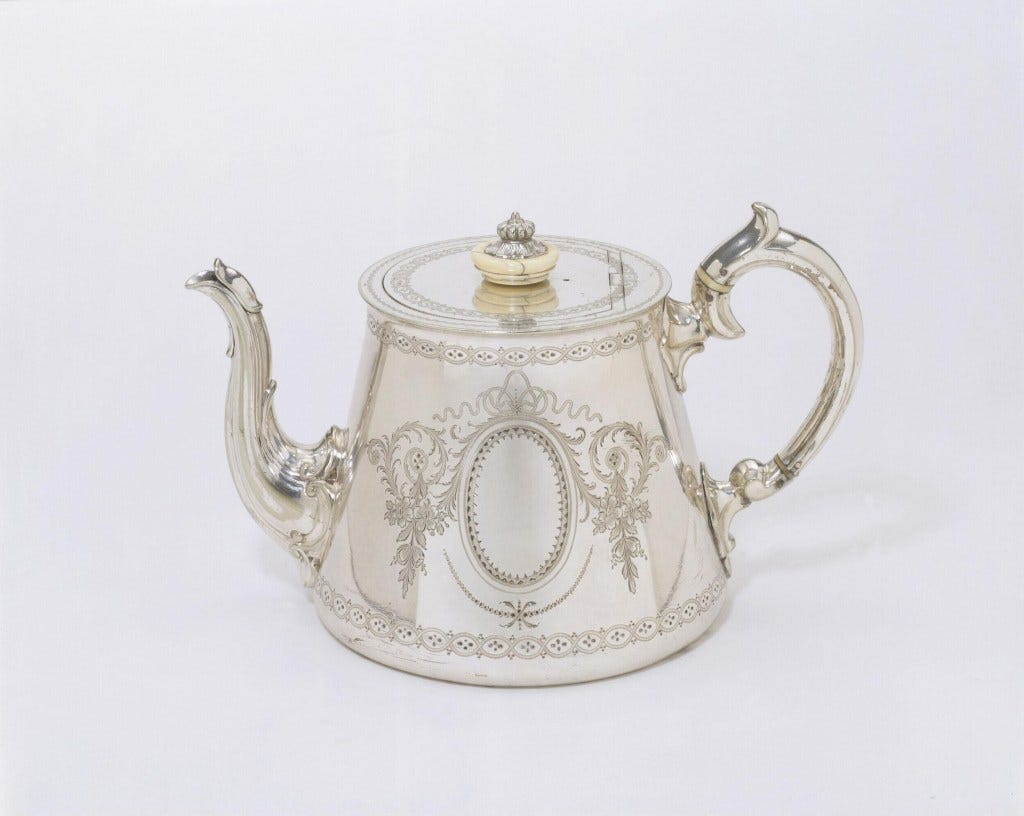
Photography didn’t start in Birmingham, but the city made it possible at scale. Cameras required metal parts, precision engineering, and chemical processes, all of which were closely linked to developments in metallurgy. And silver plating played its own part.
Metallurgy helped build the industry, and photography helped record it.
By the early 20th century, Birmingham had become a complete ecosystem. Different areas had distinct roles: Soho for power, the Jewellery Quarter for craft, Aston and Digbeth for heavier industry, and the Black Country for resources. They were all connected through canals, railways, and the movement of people and materials. But this level of growth also brought challenges, such as housing, health and overcrowding, to which the city had to respond. And this is where another kind of development appears.
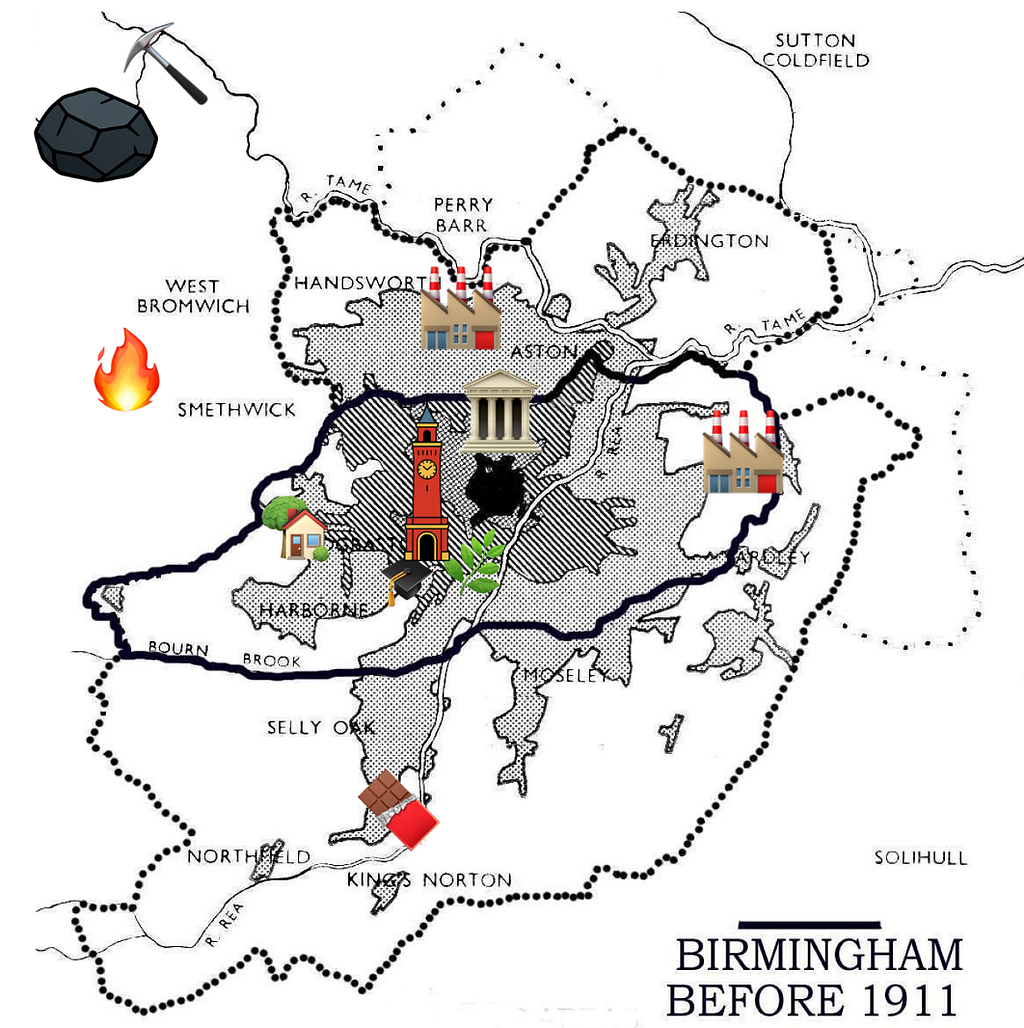
As Birmingham grew, so did its challenges. This led to new ideas about how people should live alongside industry. Developments like Bournville and later planned communities introduced better conditions and a different approach to urban living. At the same time, movements such as Arts and Crafts emphasised craftsmanship and design, showing that industry and culture remained closely connected.

An interesting example of how this influence extended further is the Guest, Keen and Nettlefold company. It began with relatively small components, like screws, bolts, fasteners, produced with precision and at scale, and exported worldwide. In that sense, Birmingham moved from local workshops to global industry, often through objects that might seem simple but were essential.
This connection between small components and larger systems continues today. Companies like GKN, which grew out of Birmingham’s industrial roots, are now manufacturers of components for aerospace and space. And in that sense, the same principles that supported early industry are still present in powering modern aerospace and space systems.
By the late Industrial Revolution, Birmingham had built something remarkable. A city where materials were shaped with extraordinary skill, where innovation came through constant interaction, and where industry could grow at a scale never seen before. But at the heart of this growth was a tension that would define what came next. Power systems, from steam engines onwards, demanded materials that could withstand higher temperatures, greater stresses, and longer operating times. So metallurgy did not simply support industry, it evolved with it.
If the Industrial Revolution was about learning how to make things, the next phase was about learning how to develop materials for outstanding performance. Some of the techniques that emerged during that period, like electroplating, would take on completely new roles.
Continue reading: Part 2 — Metallurgy in Birmingham: from power systems to dark matter here.